 Protection
Insect Nets
Usually specified together — shade for light, insect net for pest exclusion.
View product
Shading & Netting
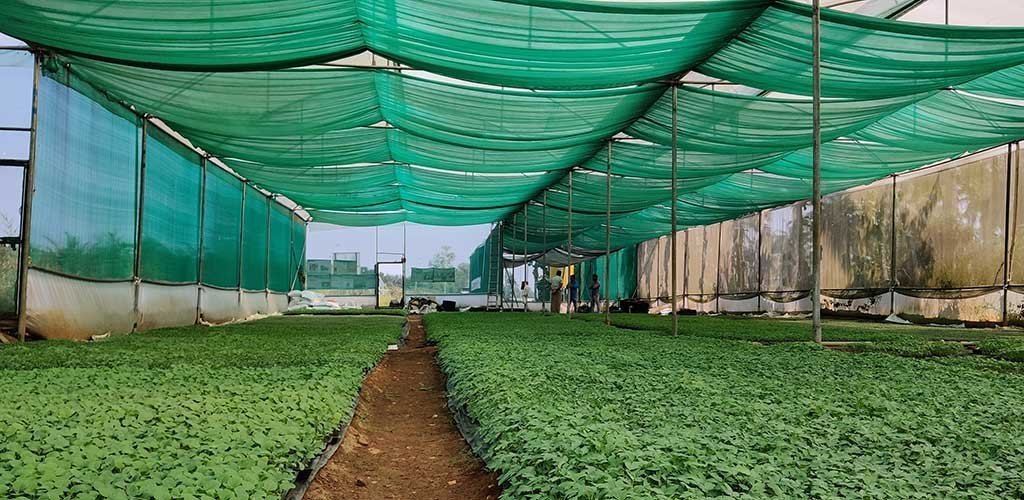
Knitted HDPE from 25% to 90% shade factor. The number matters more than the price — a net that is 25 points wrong will cost you the season.
Overview
Most shade net gets bought on colour and price. Both are close to irrelevant. The number that decides whether your crop thrives or cooks is shade factor — the percentage of incident light the net removes.
Get it wrong in either direction and you pay. Too little shade and you get leaf scorch, heat stress and flower abortion through the Indian summer. Too much and you get etiolated, leggy growth, delayed flowering and thin stems — a crop that looks lush and yields nothing.
The correct factor depends on crop, growth stage, latitude and season. A gerbera house in Nadia and a tea nursery in Jorhat are not the same problem. A nursery bench in May and the same bench in December are not the same problem either — which is why retractable or seasonal layering often beats a single fixed net.
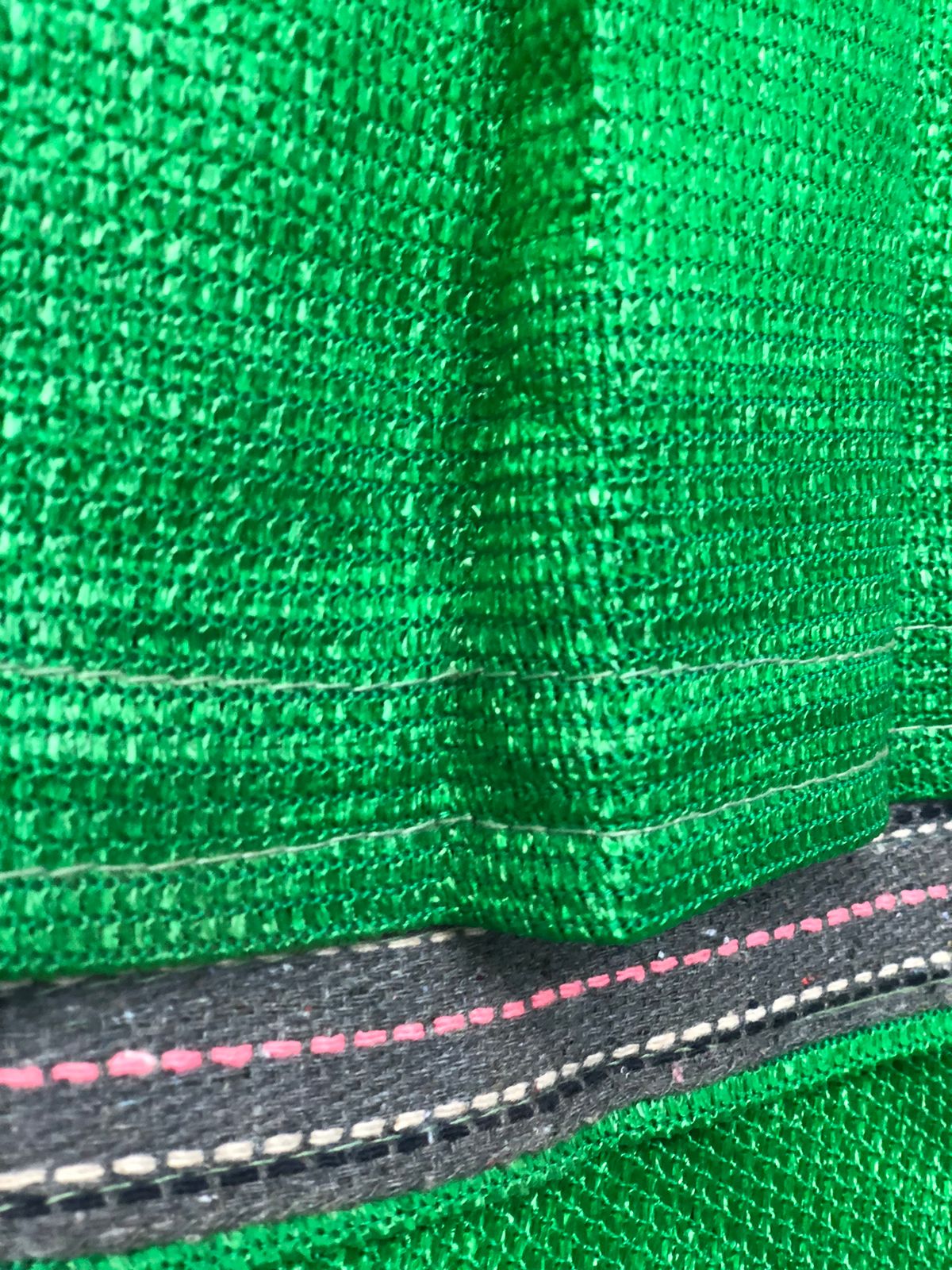
Our nets are knitted rather than woven. Knitting matters: a knitted net does not unravel when cut or torn, so a snag stays a snag instead of becoming a tear across the roll. All grades carry a UV stabiliser package sized for multi-season Indian exposure.
Features
Consistent light interception across the roll and between batches — the number on the label is the number on the bench.
Does not unravel from a cut or snag. A woven net turns a small tear into a lost roll.
Sized for Indian exposure. The failure mode of cheap net is embrittlement in season two.
Open structure lets water and air through instead of ballooning or pooling.
Standard widths cut to structure span, reducing seams and stitching labour.
Edge tape and eyelets on request — the edge is where nets fail first.
Specifications
The table below is a starting point, not a prescription. Latitude, season and growth stage all shift the answer — send us the specifics.
| Shade Factor | Colour Options | Typical Crops / Use | Construction |
|---|---|---|---|
| 25% | Green, White | Hardening off, light acclimatisation | Knitted monofilament |
| 35% | Green, Black | Capsicum, tomato under structure | Knitted monofilament |
| 40% | Green, Black | Cucumber, general vegetable | Knitted monofilament |
| 50% | Green, Black, White | General purpose nursery, bedding plants | Knitted tape |
| 60% | Green, Black | Anthurium, foliage plants | Knitted tape |
| 75% | Green, Black | Gerbera, orchid, shade-loving ornamentals | Knitted tape |
| 85% | Green, Black | Deep shade foliage, mushroom sheds | Knitted tape |
| 90% | Black | Car parks, poultry, maximum shade applications | Knitted tape |
Shade factor is nominal and measured under standard test conditions; effective shading on site varies with net age, dust load and angle of installation. Roll widths and lengths available on request — confirm span before ordering to avoid unnecessary seams.
Applications
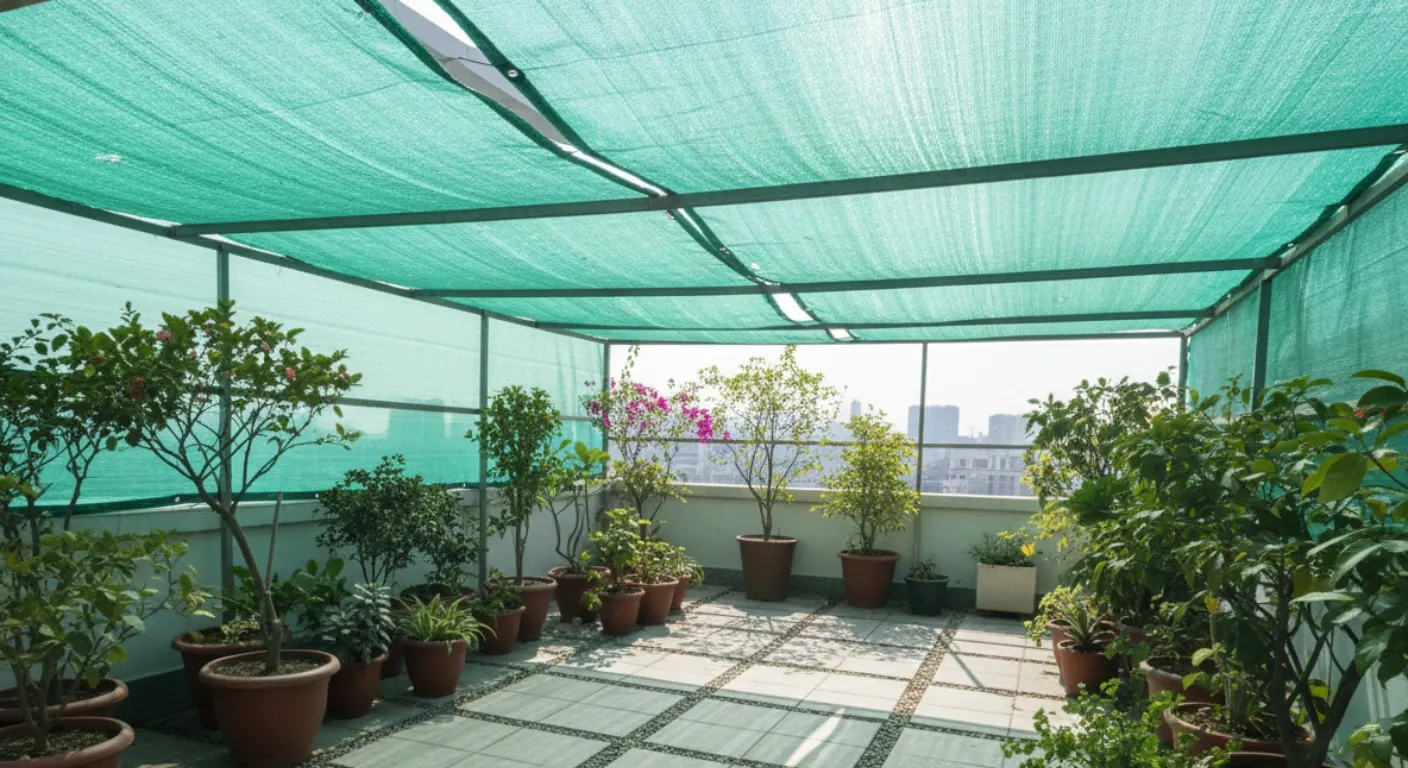
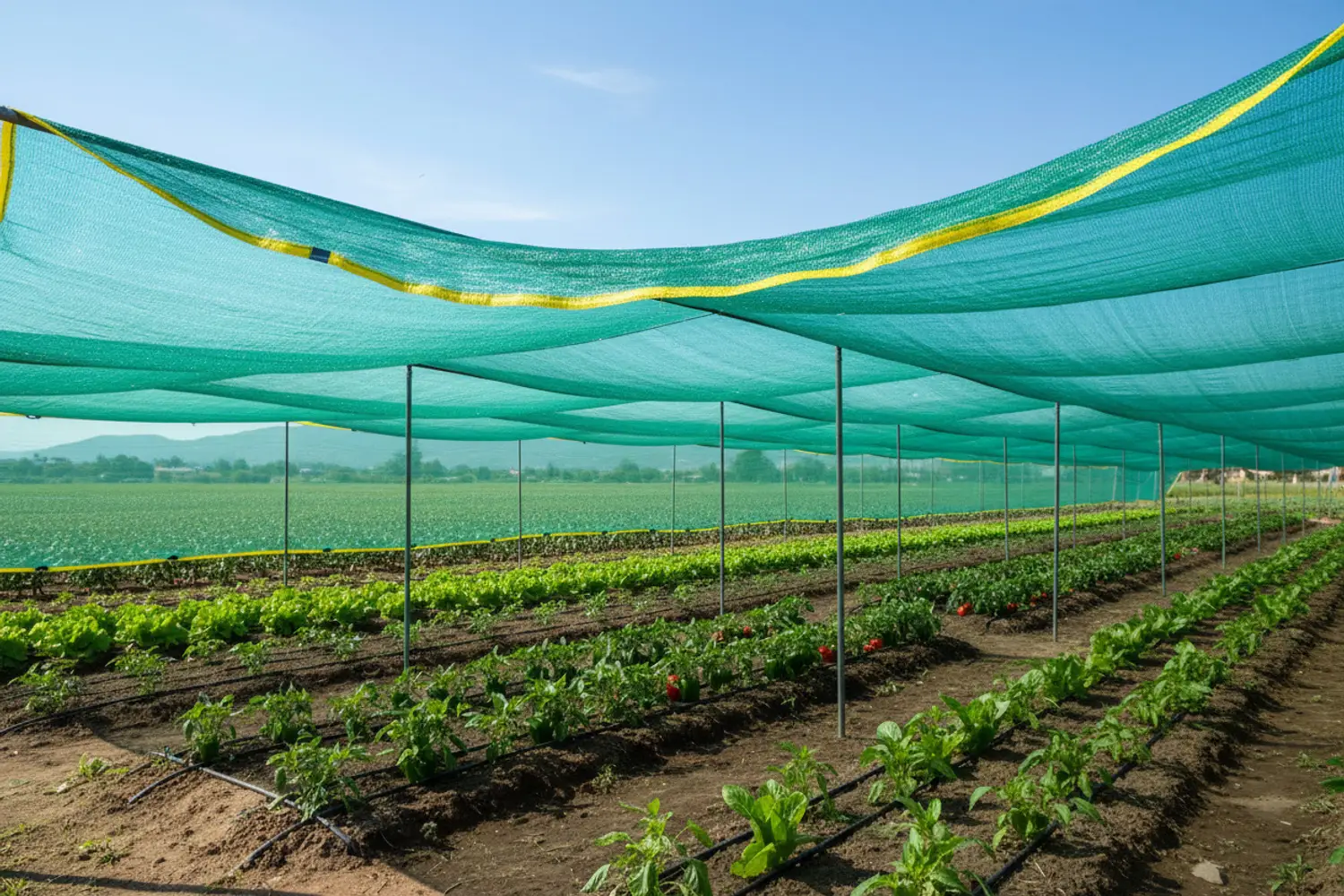
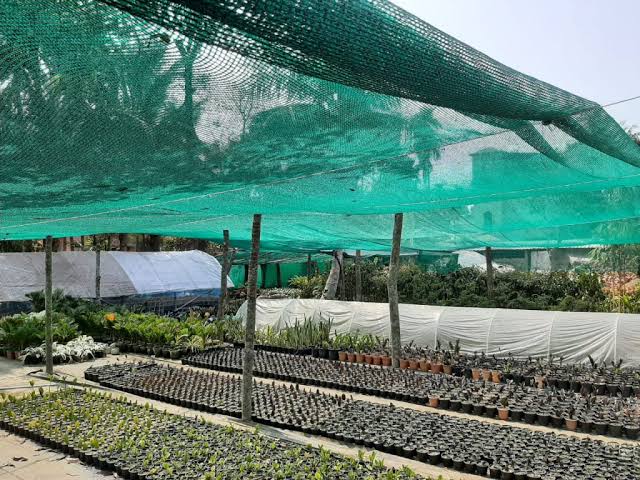
Anywhere incident light needs to come down by a known amount.
Advantages
Shade netting is one of the cheapest interventions in protected cultivation and one of the most frequently mis-specified. The gap between a correct net and a wrong one is a whole season.
Gallery
Industries
FAQ
It depends on crop, growth stage, latitude and season — which is why a single answer on a price list is usually wrong. As broad orientation: 25–35% for hardening off and light-hungry vegetables, 50% as a general nursery default, 75% for gerbera, orchid and shade-loving ornamentals, 85–90% for deep shade applications and non-crop uses. But a 50% net that works in December will not carry the same crop through May in Eastern India. Send us crop, location and season and we will specify against those rather than against a category.
Less than most people assume, and less than shade factor. Green is conventional and slightly reduces perceived glare. Black gives the most neutral light quality and is standard where shade factor is the only concern. White reflects more and reduces heat build-up under the net, which can help in very hot open sites. If a supplier is selling you on colour rather than factor, that tells you something about the supplier.
A properly UV-stabilised knitted HDPE net should give several seasons of service under Indian exposure. Real life depends on the UV package, installation tension and site conditions. The common failure mode for cheap net is embrittlement — it goes brittle and shreds in season two, and the replacement plus the labour costs more than specifying correctly at the start. Nets installed slack also fail early: flapping abrades the fabric against the structure.
A knitted net does not unravel. Cut it or snag it and the damage stays local. A woven net, once torn, will run — a small tear propagates across the roll, and you lose the whole panel. In field conditions with wind, tools and birds, this difference decides service life more often than the material grade does.
Yes, and for many operations it is the better answer than a single fixed compromise net. Two nets can be layered to increase effective shading through peak months and one removed as light drops. Retractable systems do the same thing mechanically. If your crop needs materially different light in summer and winter, discuss layering with us before you buy one net and try to make it work year-round.
Enquiry
Send the crop, your district and the structure span. You will get a written recommendation with shade factor, colour, construction and roll width.
Related
Products that typically ship in the same order.
Protection
Usually specified together — shade for light, insect net for pest exclusion.
 Protection
 Structures
 Structures
Clamps, profiles, springs and fixings for tensioning net correctly.