
 Growing Media
Urban & Organic
Vertical Gardening
Modular panels, media and irrigation specified as one assembly. Most failed green walls in India failed at the irrigation, not the planting.
Overview
Green walls fail at the plumbing
Walk past enough vertical gardens in Indian cities and you see the same picture: a bright green top third, a struggling middle, and a dead bottom. That is not a plant selection problem. That is an irrigation design problem, and it is almost universal.
A green wall is a growing system operating in the hardest possible orientation. Water runs down. The top dries out fastest because it gets the most sun and wind; the bottom drowns because everything above it drains through. Media volume per plant is tiny, so there is no buffer — a system that misses a cycle in May does not recover. And the whole assembly hangs on a building, so weight and waterproofing are structural questions, not horticultural ones.
The systems that work in India get three things right together: zoned irrigation with separate control top to bottom rather than one line feeding the whole wall, media that holds water without holding weight, and honest plant selection for the aspect — a west-facing Kolkata facade in May is a brutal environment and most of what gets specified for green walls will not survive it.
We supply modular panel systems with the media and irrigation designed together. If you want a beautiful render, plenty of people will sell you one. We would rather tell you what your aspect will actually support.
Features
Designed to survive
Zoned irrigation
Separate zones top to bottom. One line feeding a whole wall is why the bottom drowns and the top dies.
Weight-conscious media
Coir-based lightweight blends. Saturated media weight is a structural load, not a detail.
Modular panels
Individual modules replaceable without dismantling the wall — plants die and get replaced.
Aspect-honest selection
We will tell you what a west-facing Indian facade actually supports in May.
Waterproofing separation
Air gap and membrane detailing so the building fabric stays dry.
Timer and sensor control
Automated cycles with zone-level control. Manual watering of a green wall does not happen reliably.
Specifications
System types
The system type follows the application and the maintenance access. Be realistic about the latter before choosing.
| System | Typical Application | Media | Maintenance Access |
|---|---|---|---|
| Modular panel | Facade, feature wall | Coir blend | Panel-level replacement |
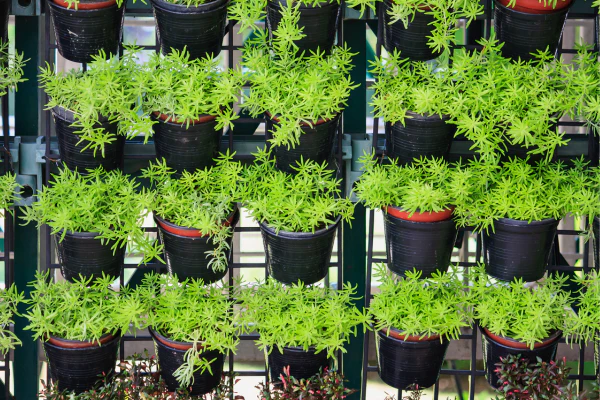
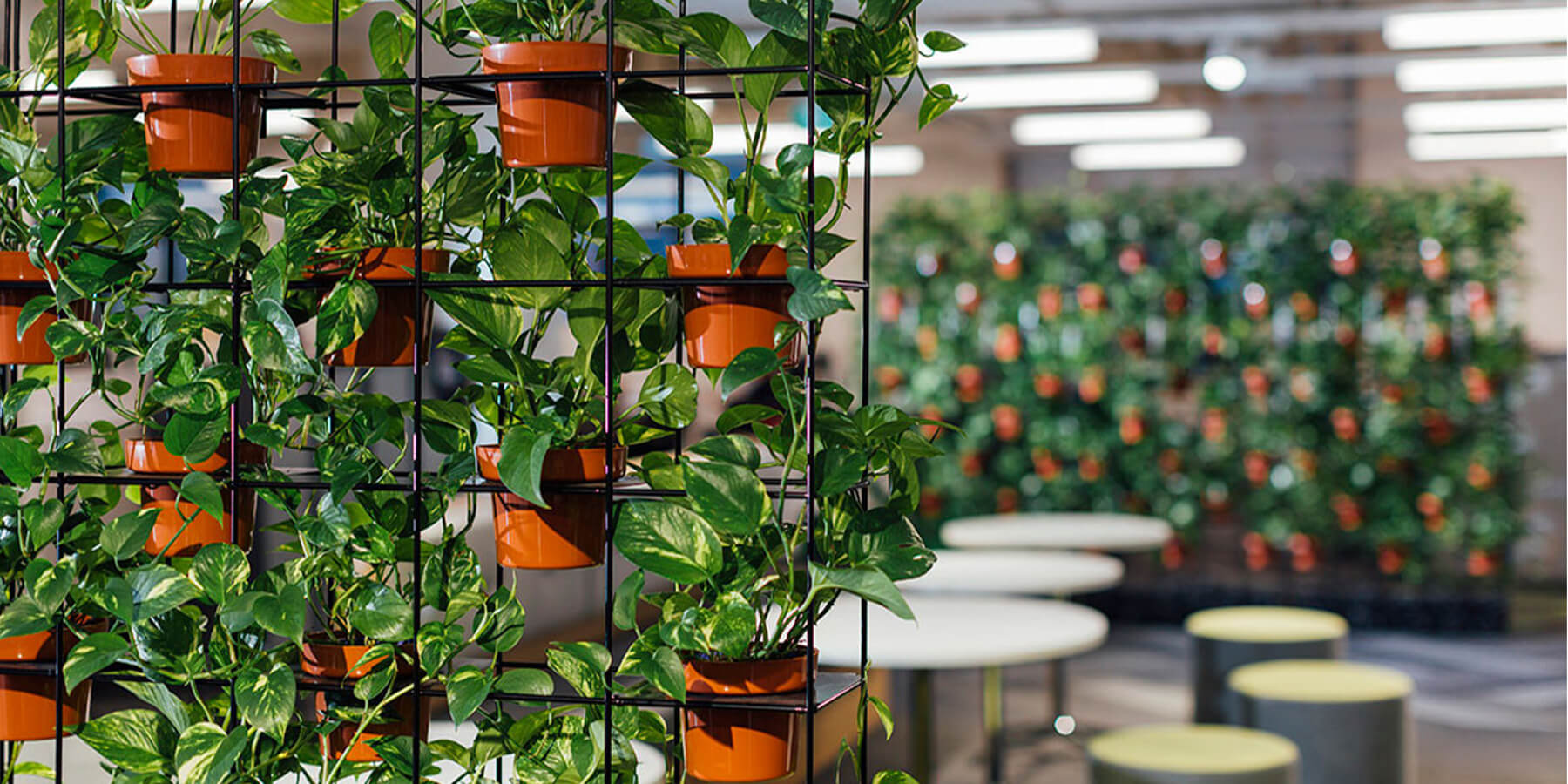
| Pocket system | Interior, small feature | Coir blend | Individual pocket |
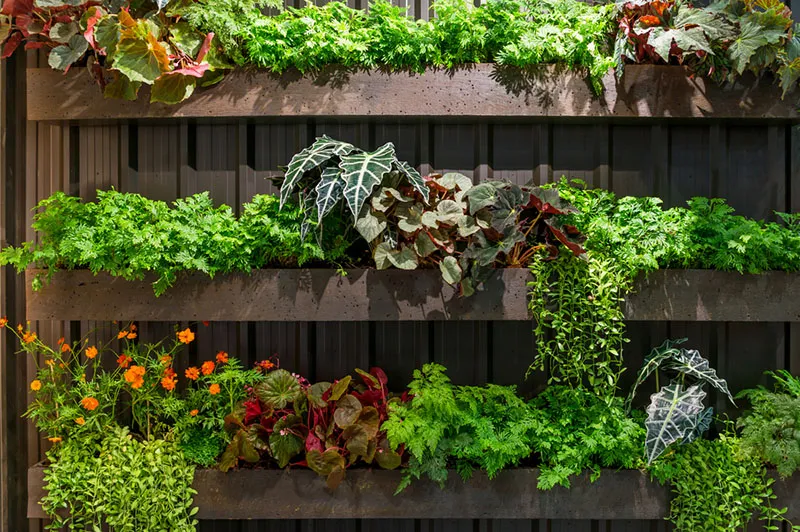
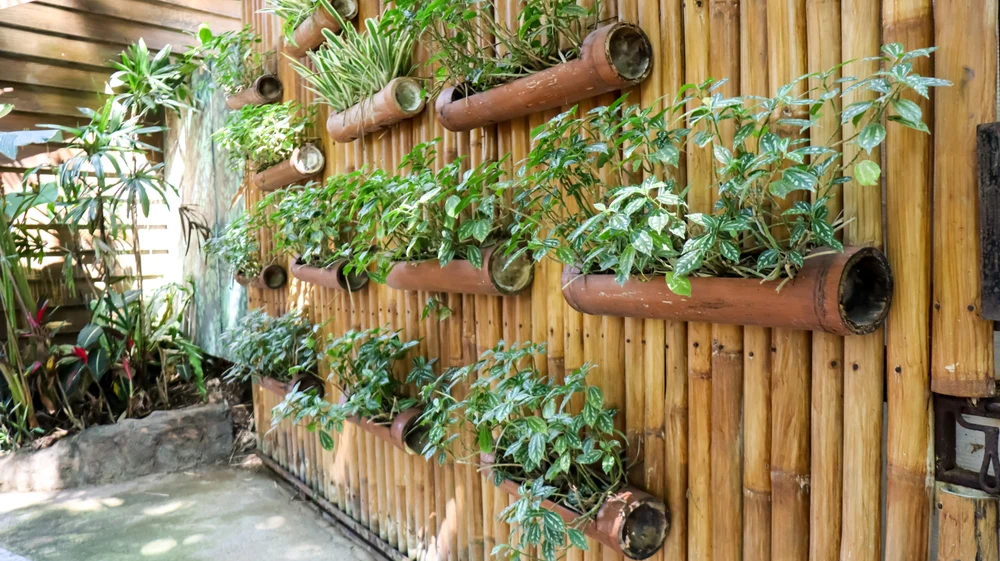
| Trough / tiered | Terrace, balcony, landscape | Coir blend / cocopeat | Row-level, easy access |
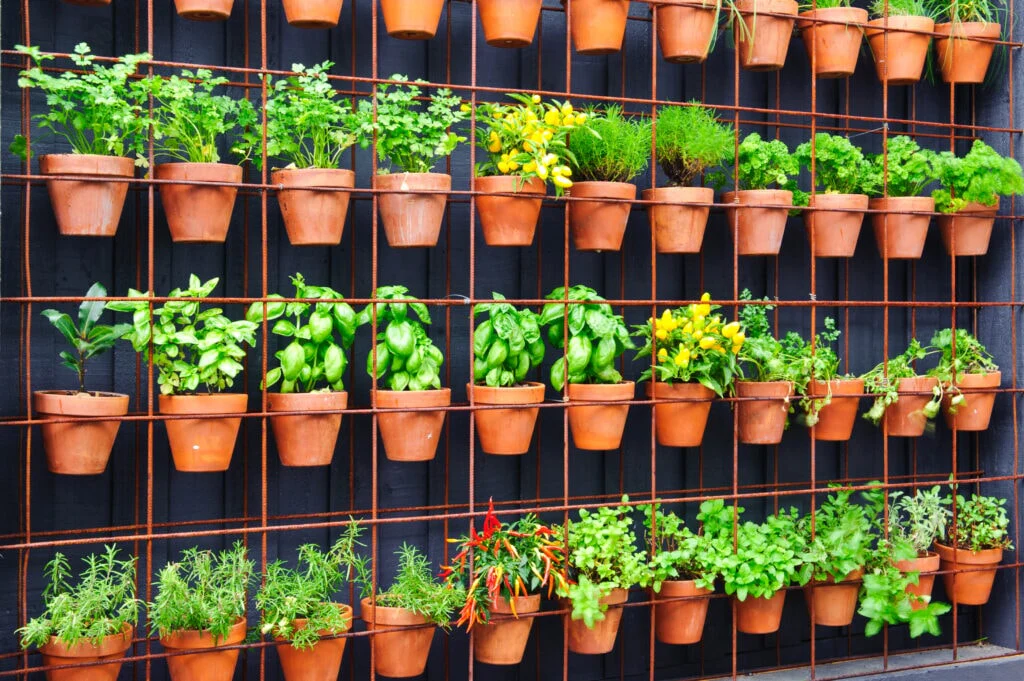
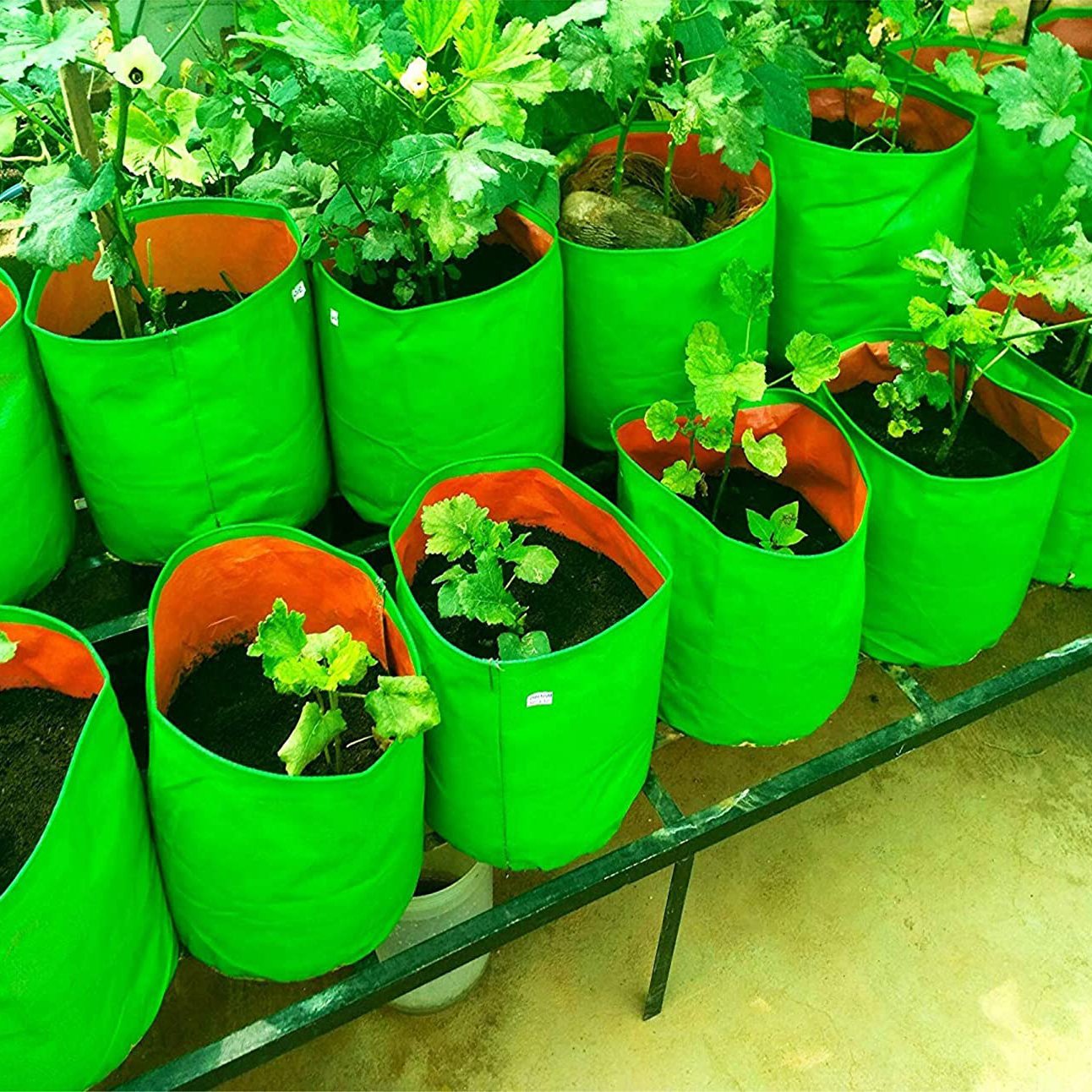
| Container vertical | Rooftop, urban farming | Cocopeat / grow bag | Full access |
| Frame & net | Climber-based green facade | Ground-planted | Ground level only |
Panel dimensions, module weight and irrigation zoning are site-specific and depend on wall area, aspect, height, building structure and water availability. Saturated system weight must be confirmed against the building’s structural capacity before installation — this is an engineering check, not a formality. We specify against the site rather than from a catalogue.
System & media
- UV-stabilised modular panels
- Lightweight coir-based media blends
- Integrated drip with zone control
- Support frame and fixing hardware
Design & support
- Aspect and exposure assessment
- Irrigation zoning designed per wall
- Saturated weight calculation provided
- Plant palette advice for the aspect
Applications
Where vertical systems go
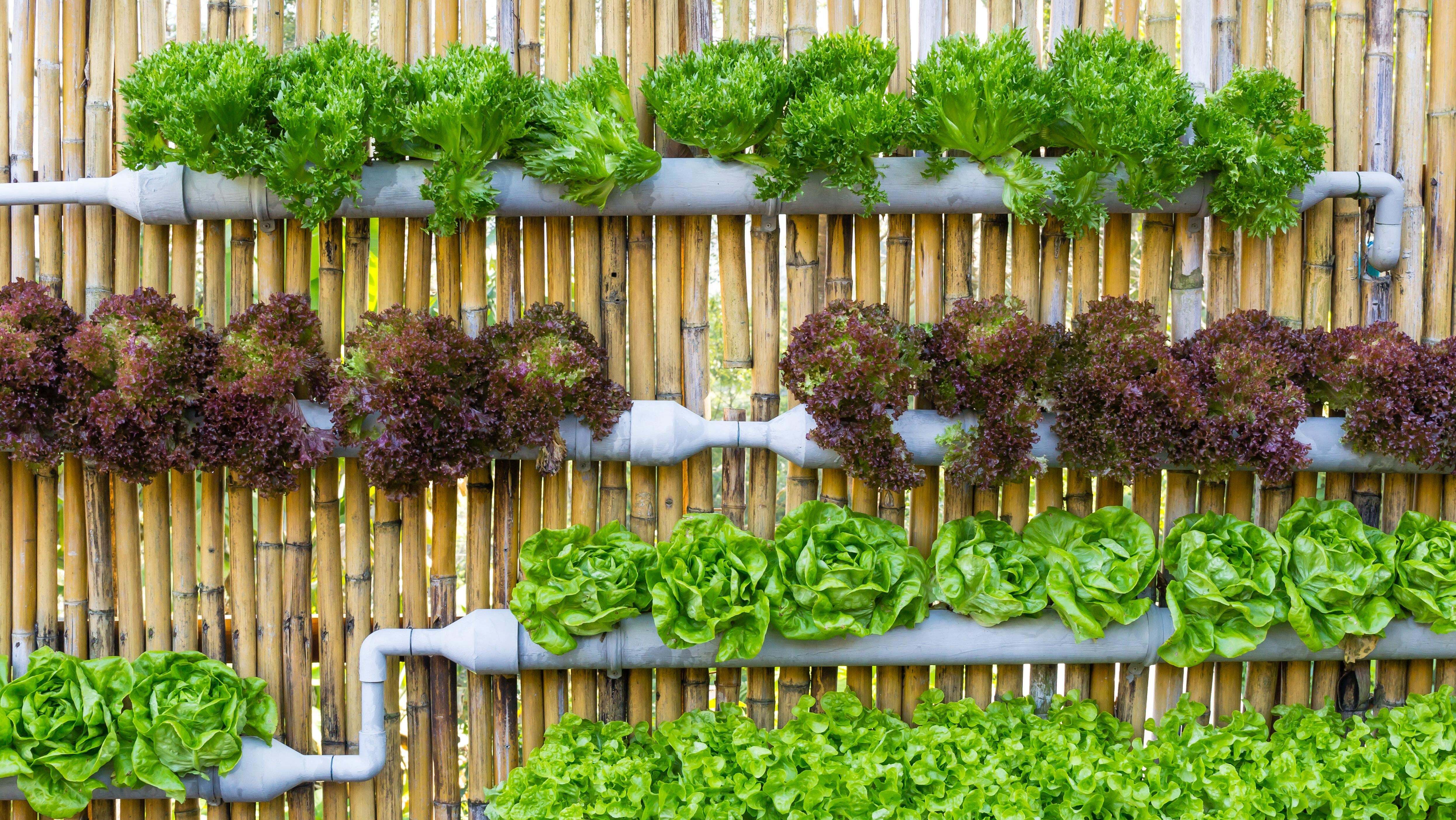
Urban space where the ground is unavailable and the wall is not.
Advantages
What a wall that works returns
Vertical gardens are bought for appearance and justified on performance. Both are real, provided the system survives the first summer.
- Growing area without ground. The whole premise — production or planting where there is no soil to use.
- Facade thermal buffer. A planted wall shades the building surface and reduces heat gain into the structure.
- Urban heat mitigation. Evapotranspiration cools the immediate microclimate around the wall.
- Modular repair. Plants die. A modular system means replacing a panel rather than rebuilding the wall.
- Visual and commercial value. In hospitality and retail the wall is the reason the space photographs well.
- Rooftop food production. Vertical systems multiply growing area per square metre of terrace.
Gallery
Installed
Industries
Sectors we supply
FAQ
Common questions
Irrigation design, overwhelmingly. Water runs down — so a single irrigation line feeding an entire wall over-waters the bottom and starves the top, which is exactly the pattern you see on failed walls: green at the top for a while, dead at the bottom, then dead everywhere. The fix is zoned irrigation with separate control at different heights. The second cause is plant selection that ignores aspect: a west-facing facade in a Kolkata May is an extreme environment, and much of what gets specified for green walls simply will not survive it. Both are design failures, not maintenance failures.
Enough that it is a structural question rather than a horticultural one, and it must be calculated saturated — not dry. Media, plants, water and structure together impose a real load on the building, and the load is highest exactly when the system is working properly. We provide the saturated weight calculation with the design, and it needs checking against the building’s structural capacity by someone qualified before anything gets fixed to the wall. Anyone selling you a green wall without raising this is skipping a step you cannot skip.
More than people expect, and this is worth being honest about before you commit. Irrigation needs checking regularly — a blocked emitter kills a zone within days in summer. Plants need replacing as they fail. Media needs periodic attention. Filters clog. The maintenance requirement does not go away, and a wall without a maintenance plan becomes a brown wall within a year or two. If nobody is going to maintain it, do not build it.
On terraces and rooftops, yes — trough and container systems work well for leafy greens, herbs and some vegetables, and they multiply growing area per square metre substantially. On a vertical facade, it is harder: media volume per plant is small, access for harvesting is awkward, and the aspect often is not right for productive cropping. Vertical food production works best on horizontal-ish systems stacked vertically, rather than on genuinely vertical walls.
It depends entirely on aspect, height and exposure, and honest answers here are shorter than the plant lists people hope for. North and east aspects support a considerably wider palette than south and west. Upper storeys get more wind and more sun than the base of the same wall, so the palette can differ within one installation. We would rather assess your specific wall and give you a realistic palette than hand you a catalogue list that photographs well and dies in May.
Enquiry
Request a
specification.
Send the wall area, its orientation, the height and who will maintain it. You will get a zoned design, a saturated weight figure and an honest plant palette.
Related
Specified alongside
Products that typically ship in the same order.
Growing Media
 Field Systems
 Growing Media
 Urban & Organic