


 Protection
Urban & Organic
Organic Farming
The physical infrastructure organic production actually runs on. We do not sell certification, and we do not sell miracle inputs — we sell the exclusion, suppression and water systems that make it work.
Overview
Organic is an engineering problem
Most organic conversion advice focuses on input substitution: swap the chemical for the botanical, the urea for the compost. That is the smaller half of the problem. The bigger half is that you have given up your interventions, so the physical system has to do the work instead.
You cannot spray for whitefly, so the whitefly has to not get in — that is an insect net at the correct mesh with a sealed perimeter. You cannot spray herbicide, so the weeds have to not germinate — that is mulch film on beds and woven ground cover on permanent plantings. You cannot rely on soluble feed to correct mistakes, so water and media have to be right from the start.
This is why organic operations that succeed tend to look different physically, not just chemically. The infrastructure is doing what the spray tank used to do. Growers who convert by substituting inputs alone generally struggle, because they kept the system and changed only the chemistry.
To be clear about what we are and are not: we are a supplier, not a certification body and not an agronomy consultancy. We can specify infrastructure that is compatible with organic production and tell you honestly where a product would create a certification question. For the certification process itself, you need an accredited certifier.
Features
Infrastructure that replaces the spray tank
Physical pest exclusion
Insect netting at correct mesh with a sealed perimeter. No residue, no resistance, no certification question.
Weed suppression without herbicide
Mulch film on beds, woven ground cover on permanent plantings. Light exclusion does the work.
Water precision
Drip and fertigation so organic nutrition reaches the root zone rather than the weeds.
Clean growing media
Coir media carries no weed seed, no soil pathogen and no chemical history.
Protected structures
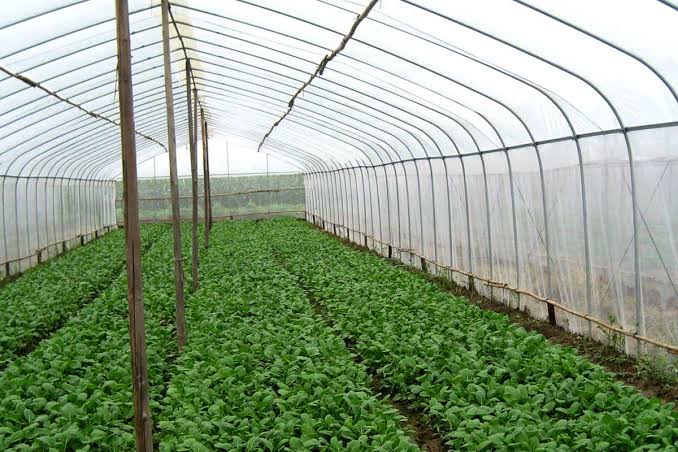
Enclosure is the foundation of organic pest management — control what enters.
Certification-aware specification
We flag where a product raises a question rather than leaving you to find out at audit.
Specifications
What we supply for organic systems
Our contribution is physical. Each line below replaces something you gave up when you stopped spraying.
| Component | Function | Replaces | See |
|---|---|---|---|
| Insect netting | Physical pest exclusion | Insecticide programme | Insect Nets |
| Mulch film | Bed weed suppression, moisture | Herbicide on beds | Mulching Films |
| Ground cover | Permanent weed suppression | Herbicide on orchard floors | Ground Cover |
| Coir media | Clean, pathogen-free root zone | Soil sterilisation | Cocopeat |
| Drip & fertigation | Targeted water and nutrition | Broadcast feeding | Irrigation |
| Protected structure | Controlled entry, climate | Open-field exposure | Polyhouse |
Certification requirements vary by standard (NPOP, NOP, EU and others) and by certifier interpretation, and they change. Nothing here is a certification guarantee — material compatibility must be confirmed with your own certifier against the standard you are working to. We will tell you what a product is made of and flag anything we think raises a question, but the audit is between you and them.
What we supply
- Physical pest exclusion netting
- Weed suppression film and ground cover
- Coir-based growing media
- Drip irrigation and fertigation components
What we do not
- We are not a certification body
- We do not issue organic input approvals
- We are not an agronomy consultancy
- We will refer you to an accredited certifier
Applications
Where this applies
Organic production and the conversion period leading into it.
Advantages
Why infrastructure-led conversion works
The growers we see succeed at organic conversion are the ones who rebuilt the physical system. The ones who struggle are the ones who only changed what went in the tank.
- Pest pressure managed by exclusion. Netting works identically in year five. No resistance, no residue, no approval question.
- Weeds handled without labour explosion. Losing herbicide usually means a weeding labour crisis. Film and ground cover prevent it.
- Residue-free by construction. Physical methods leave nothing to test for — the point of the exercise for export buyers.
- Clean starting media. Coir carries no weed seed, no pathogen load and no chemical history to declare.
- Water efficiency. Drip puts organic nutrition where the crop is instead of feeding the weeds you can no longer spray.
- Beneficials protected. No broad-spectrum sprays means predatory mites and pollinators survive to do their job.
Gallery
Organic systems
Industries
Sectors we supply
FAQ
Common questions
That is the wrong question for most of what we supply, and it is worth explaining why. Netting, ground cover, mulch film and irrigation components are physical infrastructure, not inputs — they do not enter the crop or the soil chemistry, so they are generally not the subject of input approval in the way a fertiliser or pesticide would be. What matters is material compatibility with your specific standard, and that varies by certifier and by standard. We will tell you exactly what a product is made of and flag anything we think raises a question. Confirm it with your certifier — not with us, and not with a supplier who tells you it is fine.
No, and you should be wary of any supplier who says yes. Certification is issued by accredited certification bodies against a defined standard, following inspection and a conversion period. A supplier is not a certifier, and a supplier claiming to deliver certification is either confused or selling something else. What we can do is supply infrastructure that is compatible with organic production and be honest about what we do not know.
Weeds, for most growers, and it catches people by surprise. Pest management has visible alternatives — netting, beneficials, botanicals — and growers plan for it. Weeds get underestimated, and losing herbicide turns into a labour crisis in the first season. This is why we push mulch film and ground cover hard for converting growers: they replace herbicide with a physical barrier that does not need reapplying and does not need a crew. Plan the weed strategy before the conversion, not after the first season.
Often, at least during conversion and often afterwards, and anyone telling you otherwise is selling something. The honest framing is that organic trades some yield for a price premium and market access — whether that arithmetic works depends on your buyer, your crop and your cost base. Good infrastructure narrows the yield gap considerably by handling pests and weeds physically rather than hoping botanical substitutes match what you gave up. It does not eliminate the gap.
Standards generally allow parallel production under conditions, but the conditions are meaningful — separation, documentation, and no risk of commingling or drift between the organic and conventional blocks. It is more administrative work than growers expect and the audit scrutiny is higher. Whether it is workable for your layout is a question for your certifier at the planning stage, before you invest in infrastructure for the organic block.
Enquiry
Request a
specification.
Send the crop, your area and the standard you are working to. You will get infrastructure specified against organic production — and an honest note on anything we think needs your certifier’s view.
Related
Specified alongside
Products that typically ship in the same order.
Protection
 Ground Layer
 Ground Layer
 Growing Media