

 Protection
Anti Hail Nets
Impact protection for orchards — often specified alongside bird netting.
View product
Shading & Netting
Bird netting, poultry containment, windbreak, thermal screen, tree guards and fencing. The netting that does not fit a category but still decides whether the crop makes it.
Overview
Shade and insect netting get specified at design stage. Everything else on this page gets bought in a hurry, usually after something has already gone wrong — the birds found the orchard, the wind flattened a row, the goats got through.
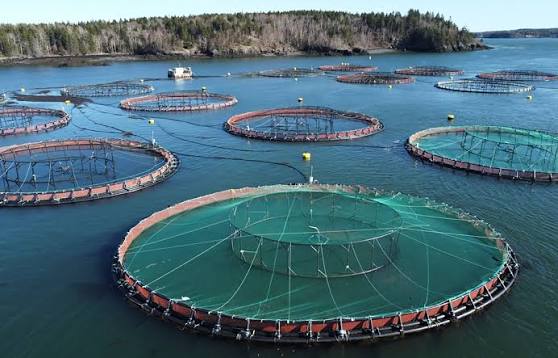
That is a false economy, because these are not trivial products. Bird netting has to be sized against the species you are actually excluding and installed so birds cannot get underneath — a net that lets a mynah walk in at ground level is decoration. Windbreak works by permeability, not by blocking: a solid barrier creates turbulence downwind that does more damage than the wind it stopped. Get the porosity wrong and you have built a problem.
Thermal screens reduce radiative heat loss overnight in protected structures, which matters in the North Indian winter far more than growers usually account for. Tree guards protect young stock from browsing and mechanical damage through the establishment years — the period that decides whether a plantation exists in a decade.
All of it runs in UV-stabilised HDPE, supplied by the roll and cut to your dimensions. If you have a netting problem that does not fit a category, this is where it lives.
Features
Mesh sized against the species you are actually excluding — and edge-sealed so they cannot walk under it.
Containment and predator exclusion for free-range and backyard systems.
Correct porosity dissipates wind energy. A solid barrier just moves the damage downwind.
Reduces overnight radiative heat loss under cover — a real factor in the North Indian winter.
Browsing and mechanical protection through the establishment years.
Every grade carries the UV package. These nets live outdoors permanently.
Specifications
Six distinct products solving six distinct problems. Tell us the problem rather than the product and we will point you at the right one.
| Net Type | Material | Typical Colour | Primary Application |
|---|---|---|---|
| Bird net | UV-stabilised HDPE | Black, green | Orchard, vineyard, fish pond |
| Poultry net | UV-stabilised HDPE | Green, black | Free-range containment, predator exclusion |
| Windbreak net | UV-stabilised HDPE | Green, black | Field and orchard boundary protection |
| Thermal screen | HDPE / composite | White, aluminised | Overnight heat retention under cover |
| Tree guard | UV-stabilised HDPE | Green, black | Young tree browsing protection |
| Fencing net | UV-stabilised HDPE | Green, black | Boundary and livestock demarcation |
Each of these is a distinct specification problem rather than a variant of one product. Bird net mesh depends on target species; windbreak depends on porosity and prevailing wind; thermal screen depends on your structure and climate zone. Send us the problem and the site conditions rather than a product name.
Applications
Across the farm, wherever something needs keeping in or keeping out.
Advantages
These products get bought reactively, which is why they get bought badly. Each one solves a specific problem, and each one fails in a specific way when the specification is wrong.
Gallery
Industries
FAQ
It depends entirely on the species you are excluding. Small birds need a fine mesh; larger species can be stopped with a coarser and cheaper net. Specifying for the wrong species means either paying for mesh you did not need or installing a net the birds simply pass through. Tell us which birds are actually causing the damage — not which birds are around — and we will size it.
The perimeter, almost always. Growers focus on the mesh over the canopy and leave gaps at ground level, at the ends of rows, or where the net meets the structure. Birds are relentless about finding these, and one gap makes the entire installation decorative. Correct mesh plus a sealed perimeter is the specification; either one on its own is a waste of money.
Permeable, and this is counterintuitive enough that people get it wrong constantly. A solid barrier stops wind at the barrier and creates a turbulent zone downwind that can do more crop damage than the original wind. A permeable net dissipates energy progressively, reducing wind speed across a much longer downwind distance without the turbulence. The porosity figure is the specification — send us your prevailing wind and field layout.
In the North Indian winter, yes, and more than growers usually expect. Clear winter nights lose substantial heat by radiation from a protected structure, and a thermal screen reduces that loss meaningfully. In Bengal and further south the case is weaker and season-dependent. It is worth an honest conversation about your climate zone before you spend on this — we will tell you if we think it will not pay back at your location.
Through the establishment period, which depends on species and browsing pressure — generally until the tree is above browse height and the stem is robust enough to shrug off mechanical contact. That can be two years or it can be five. Leaving guards on too long causes its own problems as the stem thickens, so plan removal rather than forgetting about them.
Enquiry
Describe the problem — the birds, the wind, the browsing, the winter heat loss. We will specify the net that addresses it, or tell you if netting is not the answer.
Related
Products that typically ship in the same order.
Protection
Impact protection for orchards — often specified alongside bird netting.
 Protection
 Protection
 Ground Layer
The ground layer beneath the orchard — weed suppression at 100–130 gsm.